
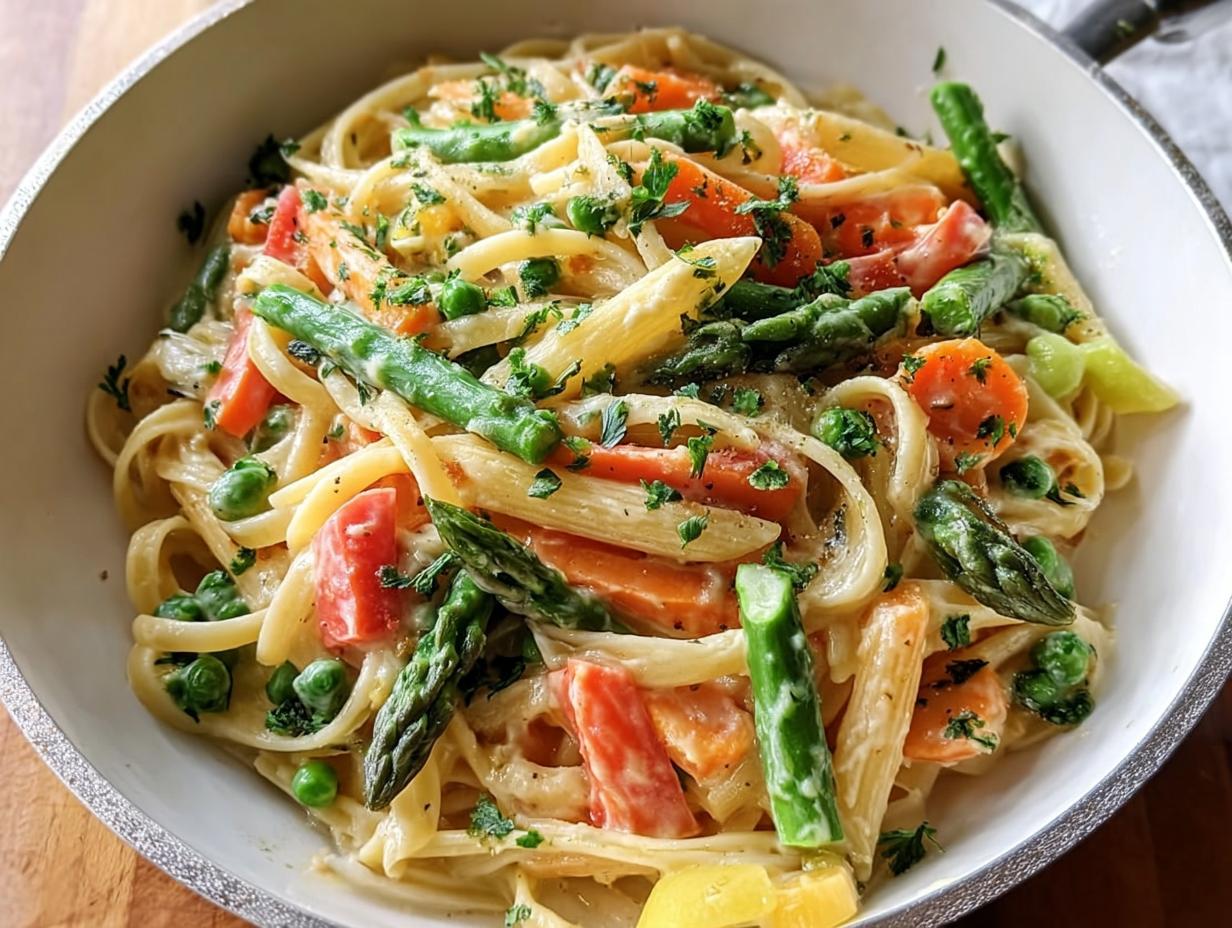
When life gets hectic – and let’s be honest, when isn’t it hectic? – I need dinners that look like I spent all afternoon fussing over them but actually took less than 45 minutes. That’s where this recipe swoops in like a culinary superhero! Forget those dull, heavy pasta dishes drowning in flavorless sauce. We are talking about vibrant green asparagus, bright orange carrots, and that beautiful pop of spring. This is genuinely the easiest, freshest way to pull together a stunning **Simple Pasta Primavera with Colorful Veggies**.
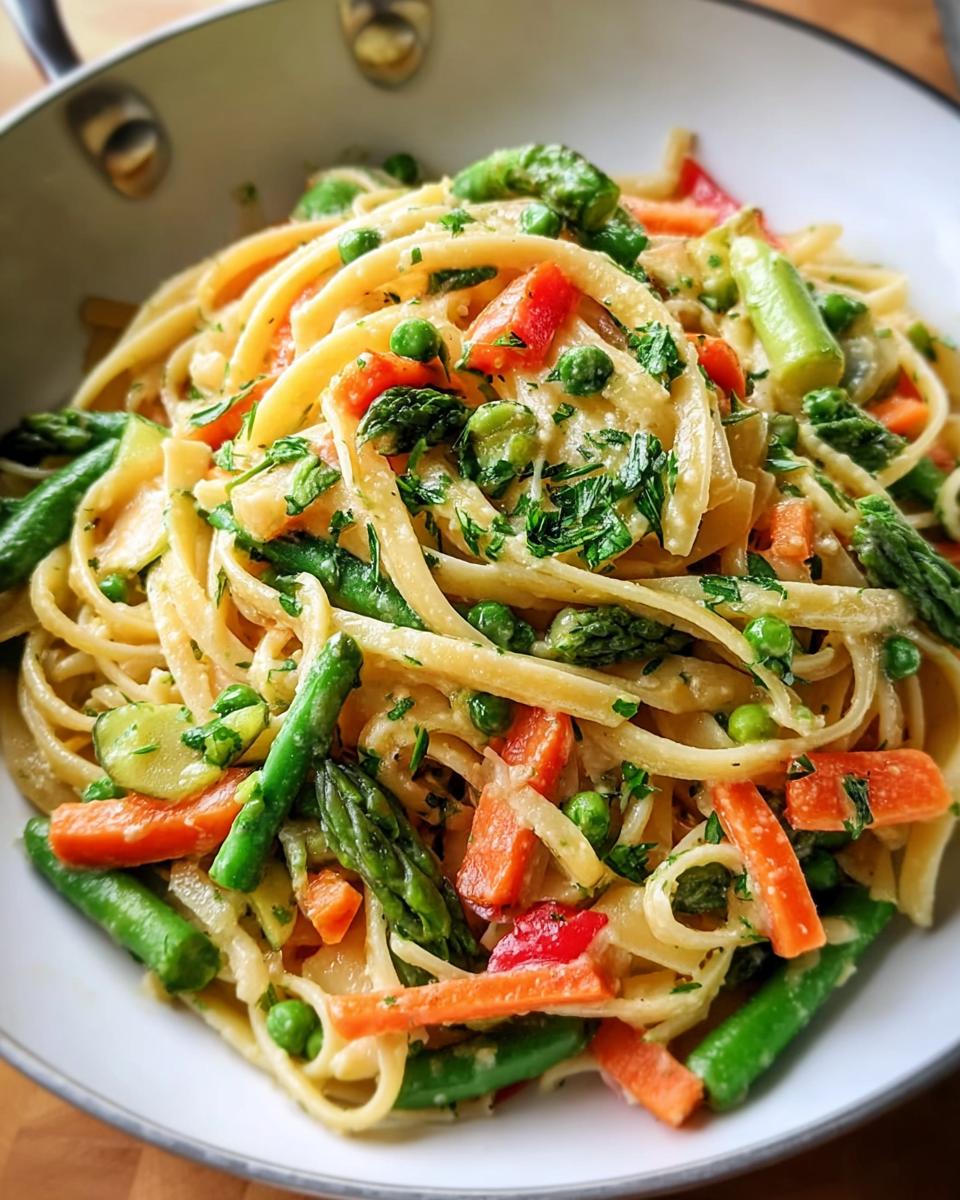
I learned quickly here at Melt It Clean that nourishing my body doesn’t mean sacrificing joy or time on a Tuesday night. This dish is packed with goodness and color, making you feel great without weighing you down. Plus, saving time means more time for the habits that truly support long-term wellness. I can whip up this pasta faster than ordering takeout, and I know exactly what’s going into every bite. You’re going to absolutely love how quickly this comes together. For more ideas on meal-prepping healthy dinners that taste amazing, check out my guide on making healthy meals that taste great!
Who This Simple Pasta Primavera with Colorful Veggies Is For
Okay, friends, let’s talk about who really needs this recipe in their rotation. If you’re like me, you want to eat clean and fuel your body right, but you’re running on fumes by 6 PM. This recipe is laser-focused on you! It’s absolutely perfect for the busy person—the one juggling work, family, or life in general—who demands fresh flavor but cannot afford an hour in the kitchen.
If your main goal is getting a vibrant plate full of vegetables without resorting to sad takeout, you’ve found your match. We’re keeping the total time under 45 minutes, seriously. This **Simple Pasta Primavera with Colorful Veggies** proves that nourishing, real food can be lightning fast. We value speed, yes, but we never compromise on quality ingredients. If you need more foolproof meals ready in a flash, take a peek at my list of quick healthy dinner recipes for busy weeknights!
Achieving the Perfect Simple Pasta Primavera with Colorful Veggies
Now that we’ve established *why* you need this recipe, let’s talk about how to make it perfectly every single time. My goal here is to make you feel totally confident in the kitchen, even when you’re short on time. Trust me, reliability is key when you’re trying to build sustainable wellness habits!
A huge texture point for this **Simple Pasta Primavera with Colorful Veggies** is getting the crunch right on those veggies. Do you boil everything? Absolutely not! We want tender-crisp, not mushy sad vegetables. For super sturdy things like broccoli and asparagus, I often give them a quick 2-minute blanch in the boiling pasta water *before* I pull the pasta out. Then, a quick sauté handles the rest. This step ensures they stay vibrant green and have that lovely snap when you bite in. If you’re looking for more foolproof, fast recipes, I’ve compiled some favourites right here!
Essential Equipment for Your Simple Pasta Primavera with Colorful Veggies
You don’t need fancy gadgets for this one, which is part of why I love it so much for weeknights. Keep these three basics handy and you’re golden. The right tools just make the process flow better, right?
- A **Large Pot**: This is for boiling your pasta, obviously, but make sure it’s big enough so the pasta doesn’t stick together while cooking.
- A **Large Skillet**: This is where the magic happens where we sauté the aromatics and bring the sauce together. It needs to be wide enough to hold all the vegetables *and* the cooked pasta later on.
- A **Colander**: Essential for draining that pasta quickly! Don’t forget to set aside some of that starchy water first; it’s critical for the sauce.
Ingredient Breakdown for Simple Pasta Primavera with Colorful Veggies
When we look at the ingredients for this **Simple Pasta Primavera with Colorful Veggies**, everything is designed for maximum flavor impact without adding complexity. We broke the list down into three simple groups: the base (pasta), the color (vegetables), and the binder (sauce). Don’t let the ingredient list scare you; it’s just good, clean fuel!
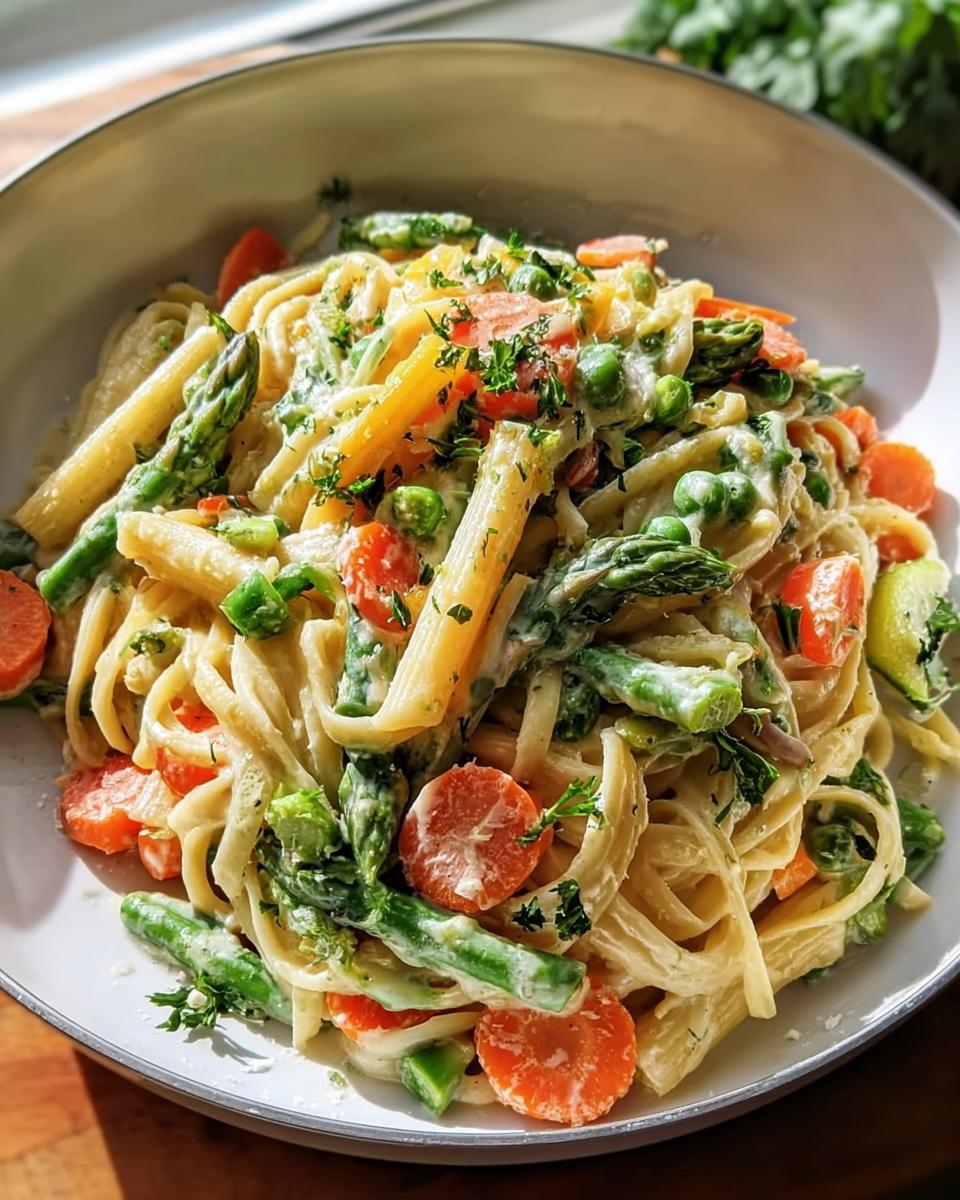
For the pasta, pick your favorite shape! Penne, farfalle—whatever holds sauce well works. The vegetables are where you get to play, but stick to those firm ones like broccoli, snap peas, and carrots, cut uniformly so they cook evenly. And for the sauce? It’s light, relying on garlic, broth, and a touch of bright lemon for that fresh Italian feel. Remember, quality here matters because there isn’t much hiding behind heavy cream sauces. I always make sure my olive oil is the good extra virgin stuff! If you want to see how I select ingredients for clean eating, my guide on ingredient selections for meals is super helpful.
Ingredient Notes and Smart Substitutions
This is where your intuition comes in, and why I trust you to make this recipe your own! Freshness is non-negotiable for this dish, especially the lemon juice. Please, please use freshly squeezed lemon juice instead of that stuff from the bottle—it makes the sauce taste bright, not artificial.
If you’re watching fat intake or just ran out of heavy cream? No sweat. You can completely skip it! To keep the sauce from getting too thin—especially if you’re skipping the cream—just add an extra quarter cup of vegetable broth during the simmering stage, or even a splash of the reserved starchy pasta water. That starch helps emulsify everything beautifully, giving you a good coating without the dairy. Also, don’t feel locked into the herbs listed; if you have fresh dill or oregano blooming in your garden, toss it in! We build confidence by learning to trust fresh flavors over rigid rules.
Step-by-Step Guide to Making Simple Pasta Primavera with Colorful Veggies
Alright, this is the fun part where everything comes together! Since we’re aiming for a total time of 45 minutes, we need to multitask smoothly. I always start by getting that big pot of water boiling for the pasta first. Salt that water generously—it’s your only chance to season the pasta itself! Get that cooking according to the package directions, but remember: we want it just shy of done, that perfect al dente. I actually keep my guide on how to make pasta recipes like a pro open on my phone when I’m timing this just right.
While it bubbles away, move straight to your large skillet. Heat the olive oil, add your minced garlic and red onion, and sauté until you can really smell that beautiful aroma. This is the flavor base of your **Simple Pasta Primavera with Colorful Veggies**! Next, toss in those harder vegetables—asparagus, broccoli, carrots—and let them cook for about five to six minutes until they start getting tender but still have bite.
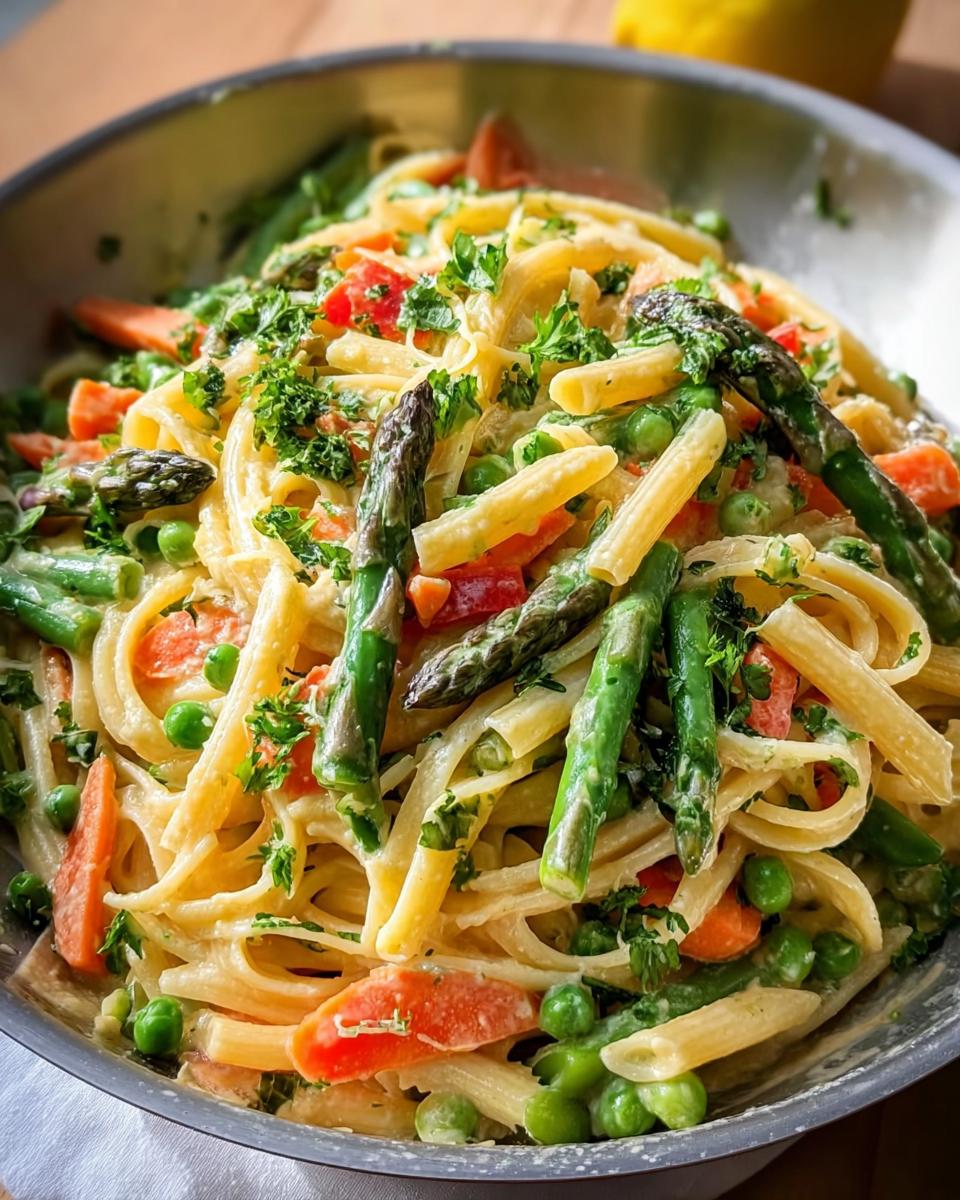
Listen, this is important: only add the tender veggies, like the snap peas and frozen peas, right near the end. If you add them too early, they turn into mush, and we aren’t making mushy pasta tonight! Toss those in for just the last minute of the sauté. Season everything well right there in the pan.
Once the pasta is ready, drain it, but make sure you scoop out at least a cup of that starchy water before it goes down the drain—that reserved water is liquid gold for making the sauce creamy later. Pour in your broth and simmer until it reduces a bit. Stir in your herbs, lemon, and Parmesan cheese right off the heat. Then, toss the drained pasta into the skillet with the veggies, adding that reserved pasta water splash by splash until everything is coated perfectly. Easy, right?
Timing the Pasta and Vegetable Cooking Stages
To nail that 45-minute mark, you absolutely must coordinate your steps. If your pasta takes 10 minutes to cook, start prepping your veggies during those 10 minutes. As soon as you drain the pasta, you should be ready to splash in the broth to start building the sauce base. The peas are the easiest element to mess up timing-wise.
Here’s the secret for the peas: If you are using fresh peas, throw them in with the snap peas. If you are using frozen ones—and there is absolutely zero shame in using frozen, they keep things moving in a healthy kitchen!—add them in the final minute of the vegetable sauté. They just need to thaw and warm through. If they cook too long, they get dull. That coordination ensures everything finishes cooking at almost the exact same moment, giving you the perfect, crisp-tender texture for your **Simple Pasta Primavera with Colorful Veggies**.
Tips for the Best Simple Pasta Primavera with Colorful Veggies Texture
Texture is everything in pasta, isn’t it? I mean, we’re not making baby food here! The real win with this **Simple Pasta Primavera with Colorful Veggies** isn’t just the color; it’s that glorious contrast between the firm pasta and the crisp-tender veggies.
My absolute top tip for texture perfection revolves around the heat. Once you toss the drained pasta and the creamy sauce mixture (broth, cheese, lemon) together in that skillet, pull the whole thing *off the burner*. Seriously, take it off the heat! If you keep the heat high when you add the Parmesan and any potential cream, that cheese can get stringy or break, and the sauce can split into an oily mess. We want smooth and luscious.
Tossing everything off the heat, using the residual warmth to melt the cheese and thicken the broth with the help of that reserved starchy water, creates a silky coat over every piece of pasta and vegetable. It’s a tiny step that elevates this from ‘quick dinner’ to ‘restaurant quality’—and you totally deserve that win tonight! For more insights on leveling up your favorite dishes, you might enjoy reading my thoughts on why everyone loves this pasta recipes tips.
Make-Ahead and Storage for Your Simple Pasta Primavera with Colorful Veggies
I know the whole point is speed, but sometimes we need to get ahead, right? This **Simple Pasta Primavera with Colorful Veggies** keeps really well, but there’s a little trick to keeping those vegetables looking cheerful.
If you’re planning for lunches later in the week, I highly recommend storing the cooked pasta and the vegetable/sauce mixture separately. When you combine them hot, the pasta continues to absorb moisture, and by day two, it can look a little sad and dry. Store them in individual airtight containers—I grab mine from my favorite reusable storage sets!
When you reheat, dump the veggies and sauce into a skillet first. Add just a splash of water or broth to loosen everything up. Once that’s hot, toss in the cold pasta and heat through quickly. This prevents the pasta from turning gummy! It’s how I keep my busy weekdays feeling clean and nourished.
Serving Suggestions for a Complete Meal
So, you’ve got this gorgeous bowl of pasta primavera—what’s next? While this dish is definitely rich with vegetables and flavor on its own, sometimes you need a little something extra to round out dinner, especially if you have hungry teens!
For me, you absolutely need texture contrast. A simple, crisp green salad dressed lightly with olive oil and white wine vinegar always wins. It keeps the whole meal feeling light and clean. If you need protein, grilled chicken breast or chickpeas tossed directly into the skillet at the end work wonders.
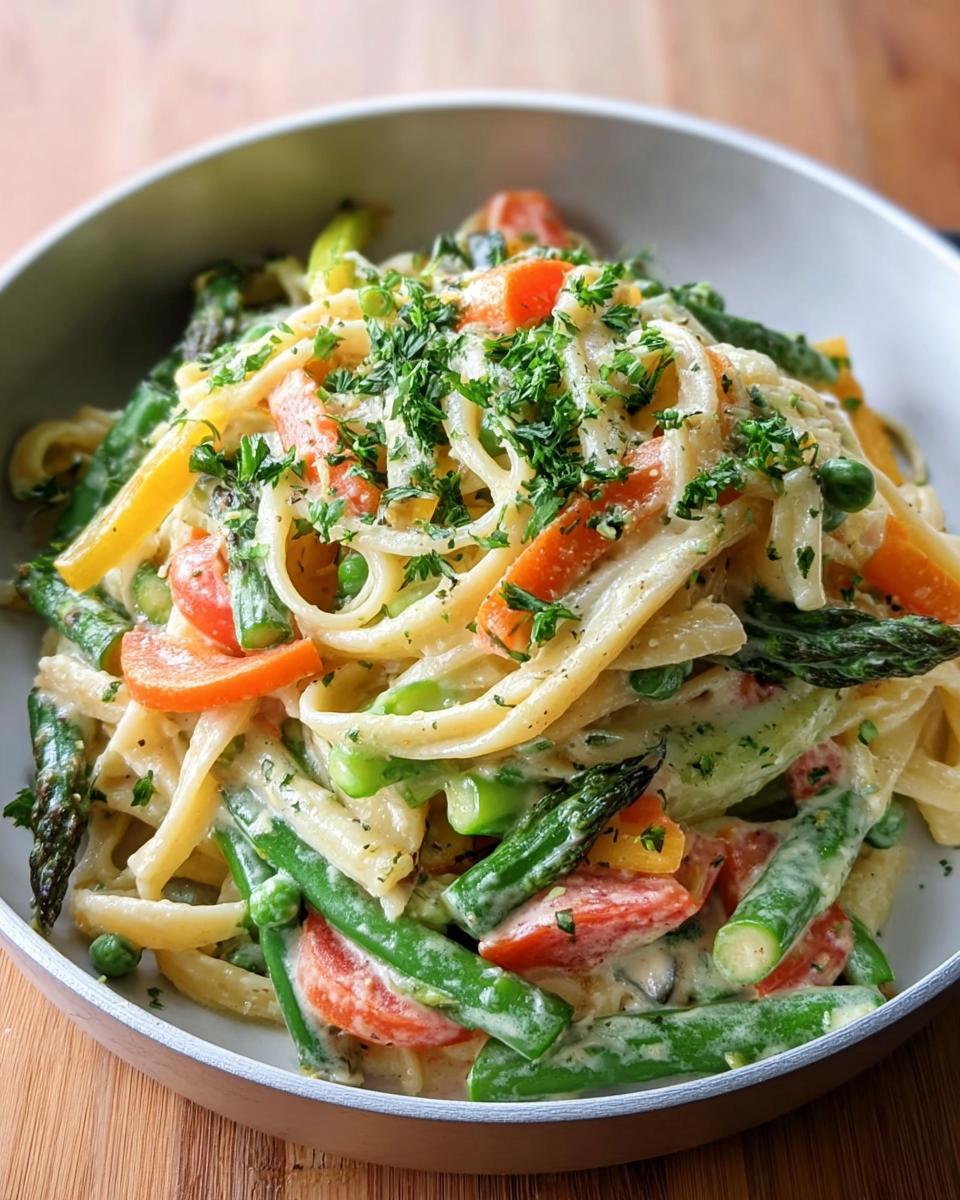
And you can’t serve Italian-inspired food without good bread, honestly! Grab a loaf of crusty Italian bread—perfect for soaking up any leftover sauce at the bottom of your plate. If you want a simple recipe for that, I actually have a great one for a fresh Italian bread nearby. It makes the whole meal feel satisfying without being heavy.
Quick Answers to Common Recipe Questions
I know that when you’re trying to build new, lasting habits—like eating more vegetables—questions pop up fast! Don’t worry about getting stuck; that’s why I put together these answers based on what I get asked most often. We want your journey toward real wellness to be smooth sailing!
Can I make this vegan or dairy-free?
Absolutely, yes! That’s the beauty of keeping things simple. The heavy cream and Parmesan are strictly optional additions for richness, not mandatory for the structure of the dish. To go fully vegan, just skip the cream and cheese entirely. When you toss the pasta at the end, use a little extra vegetable broth or just that starchy pasta water, maybe even a squeeze more lemon juice to keep the brightness. That helps give you a nice, light coating. For more great guidance on making simple swaps, check out my beginner’s guide to healthy meals!
What protein can I add to make this a more filling meal?
If you need this **Simple Pasta Primavera with Colorful Veggies** to really stick with you, adding protein is smart. The easiest way—without adding too much time—is either canned chickpeas rinsed well, or shredded rotisserie chicken. Toss them in right when you add your broth to the skillet so they warm up nicely through the sauce. You want to make sure they get coated in all those lovely garlic and herb flavors simmering away!
Do I have to use exactly these vegetables? I only have zucchini!
Please don’t feel restricted by the list! This recipe is a template for using up what looks good at the market or in your fridge. If you have zucchini, bell peppers, or even mushrooms, toss them in! The main thing to remember is timing: put the hard, dense veggies (like carrots or broccoli) in first to sauté for about 5-7 minutes. The softer veggies (like zucchini or bell peppers) go in for only the last 3-4 minutes so they don’t turn to mush. It’s all about maintaining that crisp texture we talked about.
Why do I need to reserve the pasta water? It’s just murky water!
Ah, the magic ingredient! That murky water is starchy, and that starch is crucial because it helps bind the fat (olive oil/cream) and the liquid (broth) together into a smooth, creamy sauce that actually clings to the noodles. If you skip reserving it, your sauce will likely feel watery or slide right off the pasta. Think of it as the natural, clean way to build creaminess without relying only on heavy dairy!
Understanding the Estimated Nutritional Data
I always believe in full transparency, especially when we’re talking about fueling our bodies for real energy and wellness. When I put together this **Simple Pasta Primavera with Colorful Veggies**, I try to keep things light and veggie-forward, which helps a ton!
Based on using the standard amounts listed, and assuming you use the broth instead of the heavy cream, the estimate per serving lands right around 450 calories. This gives you a great baseline!
Keep in mind, these numbers are just a starting point. If you load up on extra Parmesan or decide to toss in a grilled chicken breast, that will shift things! For example, adding chicken bumps up the protein significantly. For a full breakdown of how I look at food labels and estimates, please hop over to my official disclaimer page. That way, you know exactly the context behind these numbers as you make healthy choices!
Share Your Colorful Creations
Now that you’ve made this beautiful, fast, and fresh pasta, I want to hear all about it! Seriously, seeing your versions popping up on my feed is the best part of sharing these recipes. Did you go with asparagus and broccoli, or did you sneak in some mushrooms?
Don’t be shy! Head down to the comments below and give this recipe a star rating—it helps other busy cooks find it, and I truly value your feedback on how it worked in your kitchen. If you made a fantastic swap with your vegetables or found a way to sneak in extra greens, let everyone know!
If you snapped a picture, please tag Melt It Clean on social media! Seeing those tables piled high with colorful, nutritious food that didn’t take all day to prepare is exactly why I built this space. Happy cooking, and enjoy that amazing energy boost!
By EMILIA, Founder of MeltItClean.com
By EMILIA, Founder of MeltItClean.com
Hi, I’m EMILIA, the founder of MeltItClean.com – your digital space for natural weight loss, real wellness habits, and clean-living inspiration that actually fits your life.
For years, I struggled with the ups and downs of dieting. I tried everything — juice cleanses, low-carb crazes, fitness challenges — but I always ended up back where I started: tired, bloated, and frustrated. I didn’t just want to “lose weight” — I wanted energy, mental clarity, glowing skin, and confidence without sacrificing my joy or sanity.
After years of experimenting, learning, and unlearning, I discovered a simple truth: your body is already powerful — it just needs support, not restriction. That’s when I created Melt It Clean — a site dedicated to real transformation through clean, intentional, and nourishing daily habits that anyone can follow.
My goal was simple: build a place where people could feel informed, supported, and empowered without being overwhelmed by wellness fads.
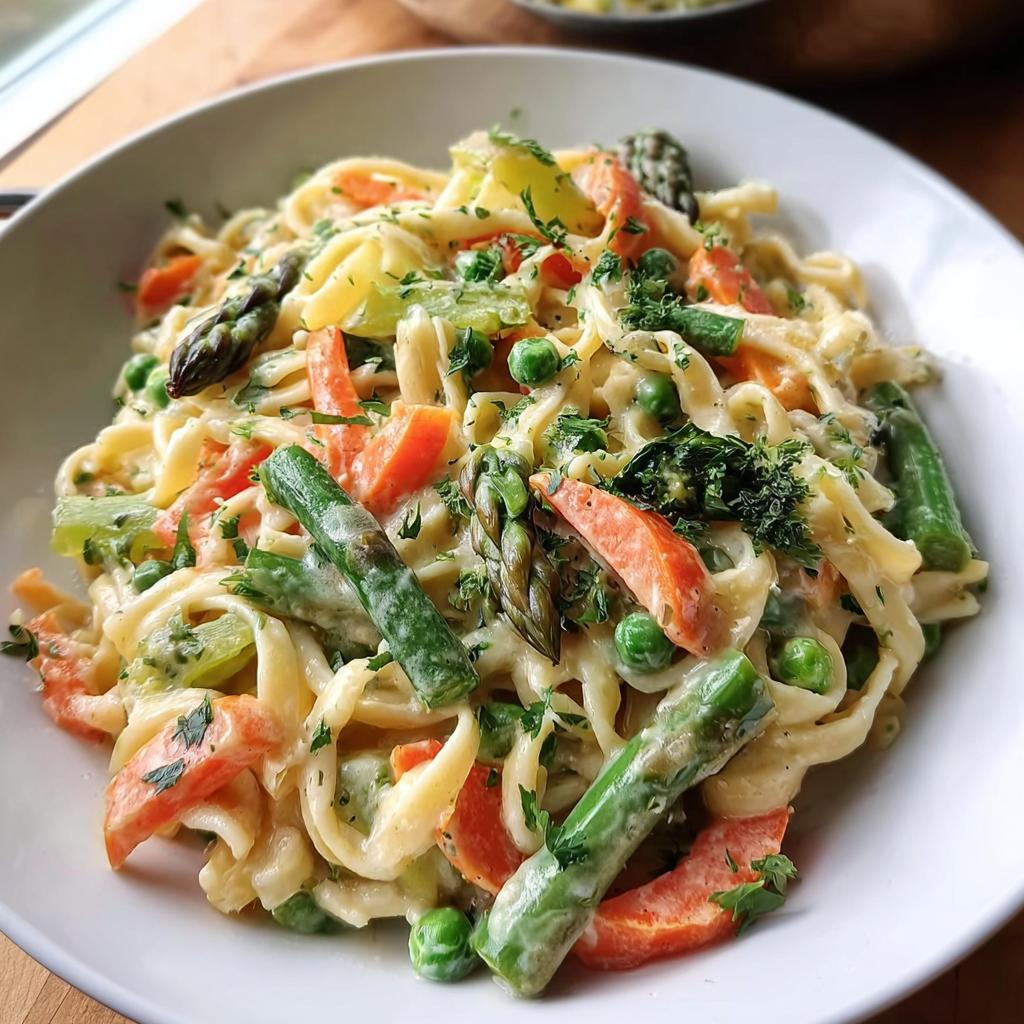
Simple Pasta Primavera with Colorful Veggies
Ingredients
Equipment
Method
- Bring a large pot of salted water to a boil. Add the pasta and cook according to package directions until al dente. Reserve about 1 cup of pasta water before draining. Drain the pasta and set aside.
- While the pasta is cooking, heat the olive oil in a large skillet over medium heat. Add the garlic and red onion and sauté for 2-3 minutes, until fragrant and softened.
- Add the asparagus, snap peas, broccoli, and carrots to the skillet. Sauté for 5-7 minutes, until the vegetables are tender-crisp. Add the peas to the skillet during the last minute of cooking. Season with salt and pepper.
- Pour in the vegetable broth and bring to a simmer. If using, stir in the heavy cream. Reduce the heat to low and simmer for 2-3 minutes, allowing the sauce to thicken slightly.
- Stir in the lemon juice, fresh herbs, and Parmesan cheese. Taste and adjust seasoning as needed.
- Add the drained pasta to the skillet with the vegetables and sauce. Toss to combine, adding a little reserved pasta water if needed to create a creamy consistency.
- Serve immediately, garnished with extra Parmesan cheese and fresh herbs, if desired.