
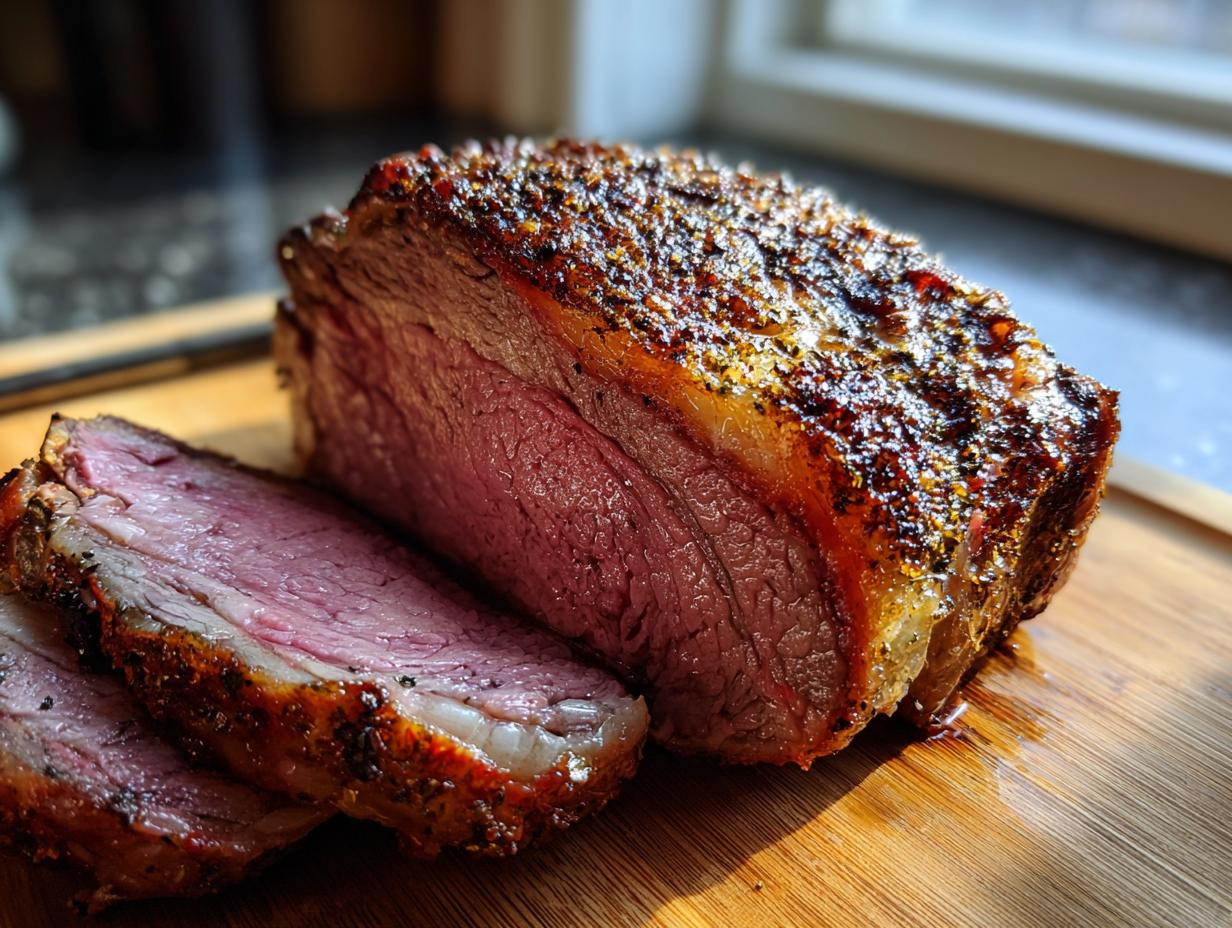
Oh, prime rib. Just saying the words makes me think of holiday gatherings, the smell of a perfectly roasted beef filling the house, and that moment when everyone’s eyes light up as you bring it to the table. I remember one Christmas, I was so nervous I’d overcooked it. My dad, bless his heart, tried to be polite, but I knew. It wasn’t the glorious medium-rare I’d dreamed of. Since then, I’ve made it my mission to nail it every single time, and trust me, I’ve got it down. That’s why I’ve created this Prime Rib Time & Temp Chart — Medium-Rare Every Time. It’s my little secret weapon to ensure your prime rib is always tender, juicy, and cooked just right.
Why This Prime Rib Time & Temp Chart is Your Secret Weapon
Honestly, cooking a prime rib can feel like a high-stakes exam. You’ve got hungry guests waiting, maybe snowed in or just ready for a feast, and the last thing you need is guessing games. That’s where this cheat sheet comes in! My Prime Rib Time & Temp Chart — Medium-Rare Every Time is all about taking the stress out of your holiday dinners or special occasions. It’s your foolproof guide to locking in that perfect, rosy medium-rare center every single time. No more dry, overcooked disappointments or worry about whether it’s even safe to eat! This chart simplifies everything, making you look like a total pro even if you’ve never cooked prime rib before. For more general cooking tips, check out my ultimate guide to ingredients, temps, and tips. It’s designed to give you consistent, delicious results so you can actually enjoy your party instead of hovering nervously over the oven.
Essential Ingredients for Perfect Prime Rib
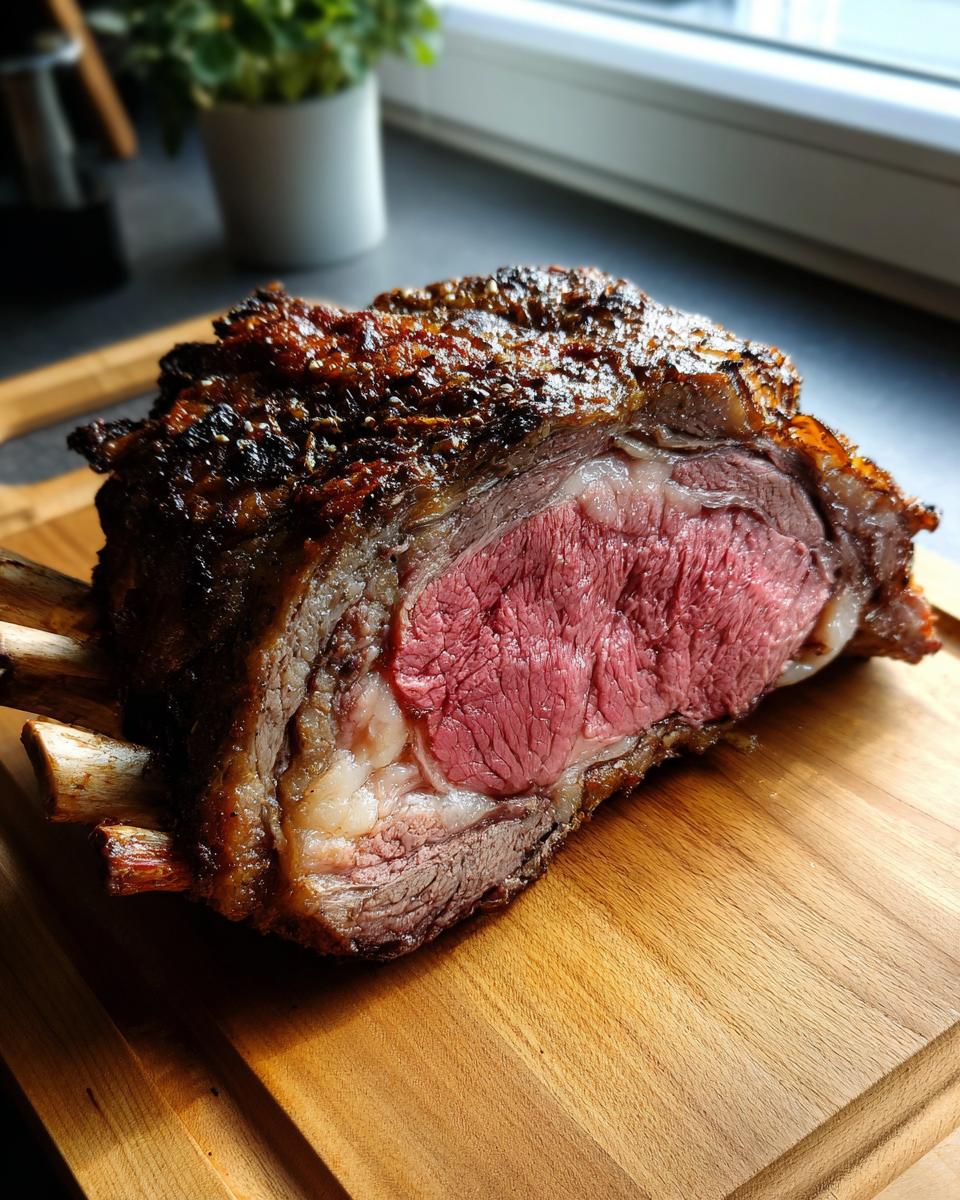
Okay, so for this amazing prime rib, you don’t need a million fancy things! The star is, of course, the roast itself. I always grab a bone-in prime rib roast, usually around 4 to 5 pounds. Having the bone in really adds flavor, trust me! Then, for the simple rub that makes all the difference, you’ll need some good kosher salt — about 2 tablespoons. Don’t skip the freshly ground black pepper; 1 tablespoon of that. Then, a tablespoon of garlic powder and a teaspoon of dried rosemary. That’s it! Simple, classic, and it lets that beautiful beef shine through.
Mastering the Prime Rib Time & Temp Chart for Medium-Rare
Alright, let’s get down to the nitty-gritty of making this prime rib sing! This method, using my Prime Rib Time & Temp Chart — Medium-Rare Every Time, is super straightforward. We start with a bang and then let the oven do its magic at a gentler pace. It’s all about controlling that heat and knowing when to trust your thermometer. For more on general cooking temps and tips, you can check out my ultimate guide to ingredients, temps, and tips.
Preheating and Preparation
First things first, crank your oven up to a roaring 450°F (230°C). While it’s heating, grab your beef and give it a good pat-down with paper towels. Don’t skip this! A dry surface is key to getting that gorgeous, browned crust we all love.
Creating the Perfect Rub
In a little bowl, I mix up the salt, pepper, garlic powder, and rosemary. It’s a simple combo, but it’s got that perfect savory punch that complements the rich beef without overpowering it. Give it a good stir to make sure everything’s blended. This is where the flavor really starts!
The Initial High-Heat Sear
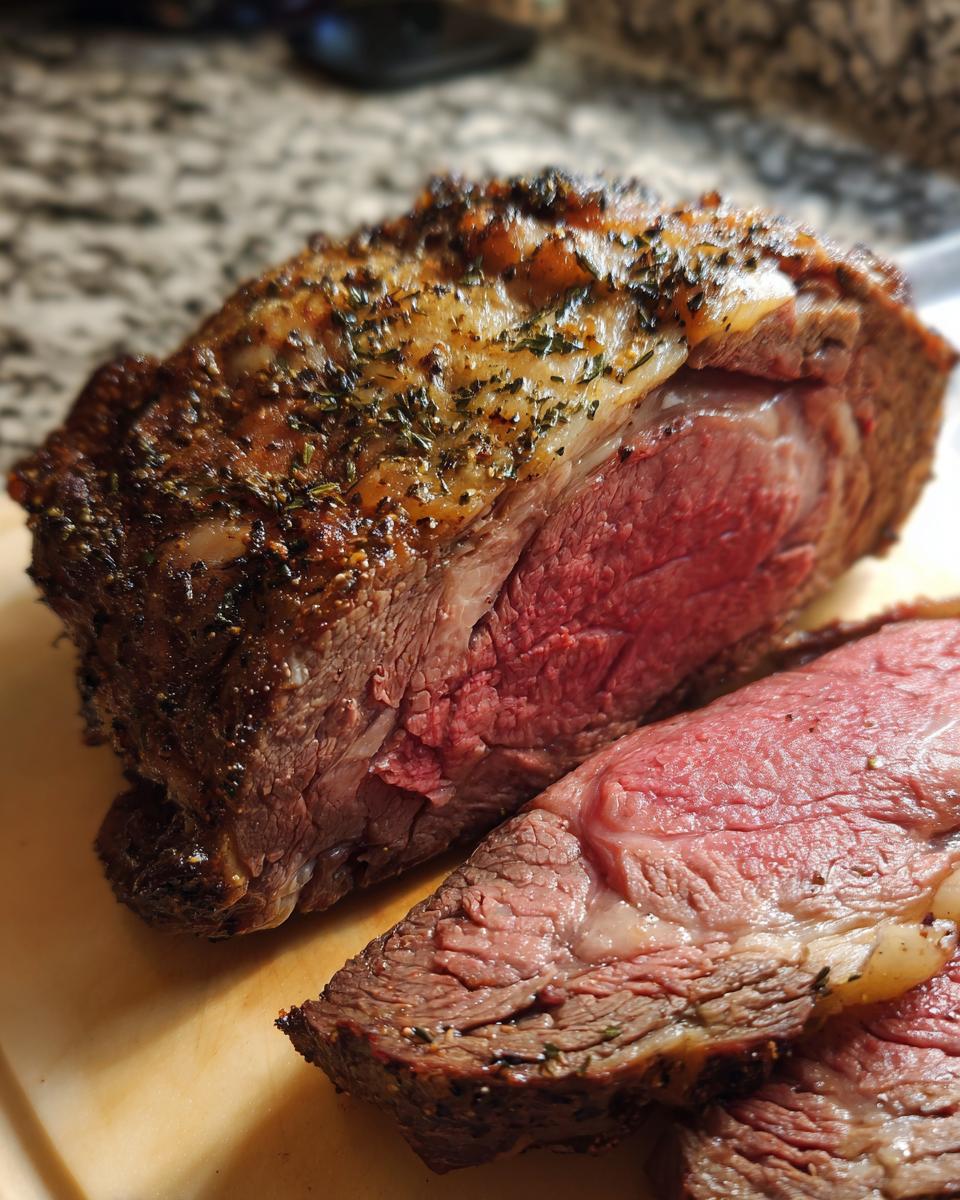
Now, take that glorious rub and slather it all over the prime rib. Get into all the nooks and crannies! Then, pop that roast, fat-side up, into your roasting pan. Into the hot oven it goes for just 15 minutes at 450°F. This is your flavor-building blast!
The Gentle Roast for Medium-Rare
After that initial sear, it’s time to turn the heat down. Lower your oven to 325°F (160°C). Now, we let it roast gently. For a medium-rare prime rib, you’re looking at roughly 13 to 15 minutes per pound. This is just a guideline, though – your thermometer is your best friend here for that perfect medium-rare!
Achieving Perfect Internal Temperature
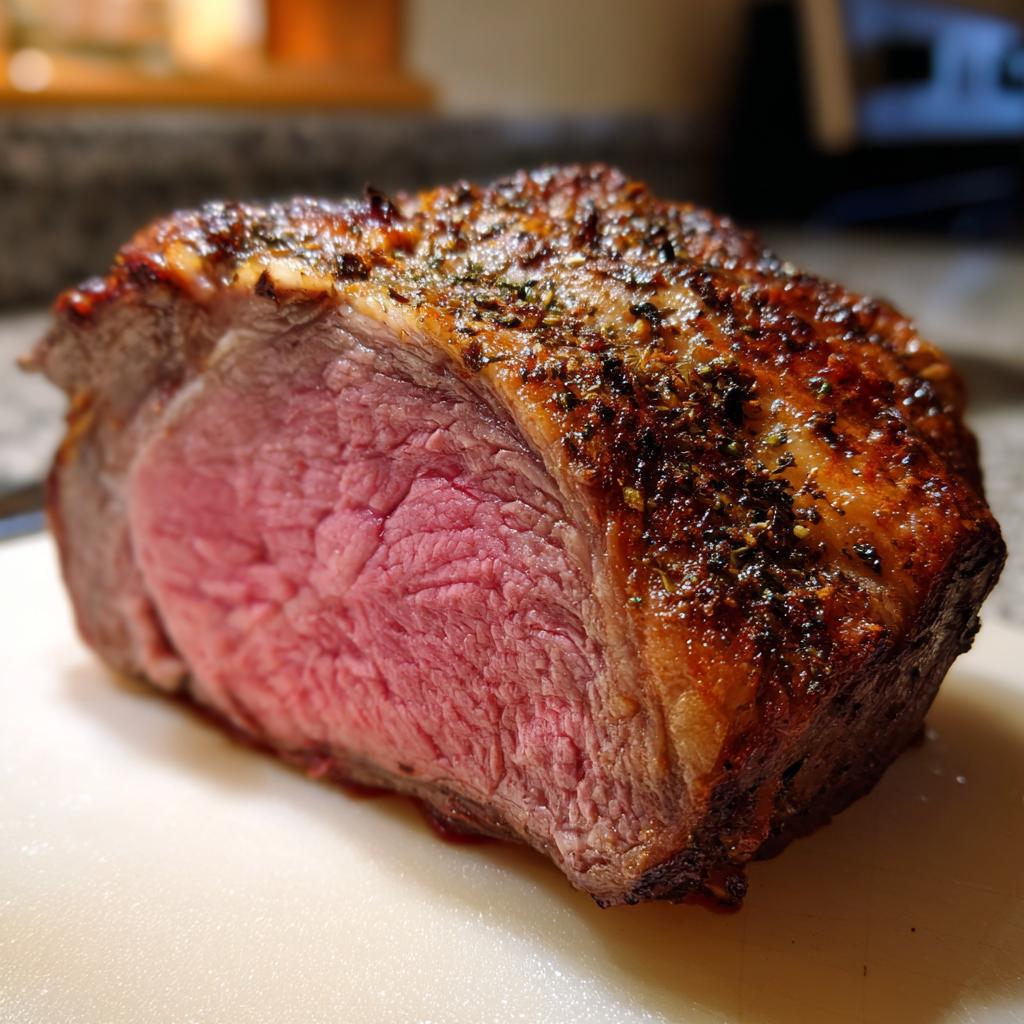
This is the MOST important step! Grab your trusty meat thermometer. You want to insert it into the thickest part of the roast, making sure you don’t hit any of the bones. For that beautiful medium-rare, we’re aiming for an internal temperature between 130-135°F (54-57°C). Seriously, a good thermometer is a game-changer.

The Crucial Resting Period
Once you hit the magic temp, pull that beauty out of the oven. Don’t be tempted to slice it right away! Loosely tent it with foil and let it rest for at least 30 minutes. This might feel like forever when you’re hungry, but trust me, it’s essential. Resting lets all those juices redistribute throughout the meat, making it super tender and juicy in every slice.
Carving and Serving
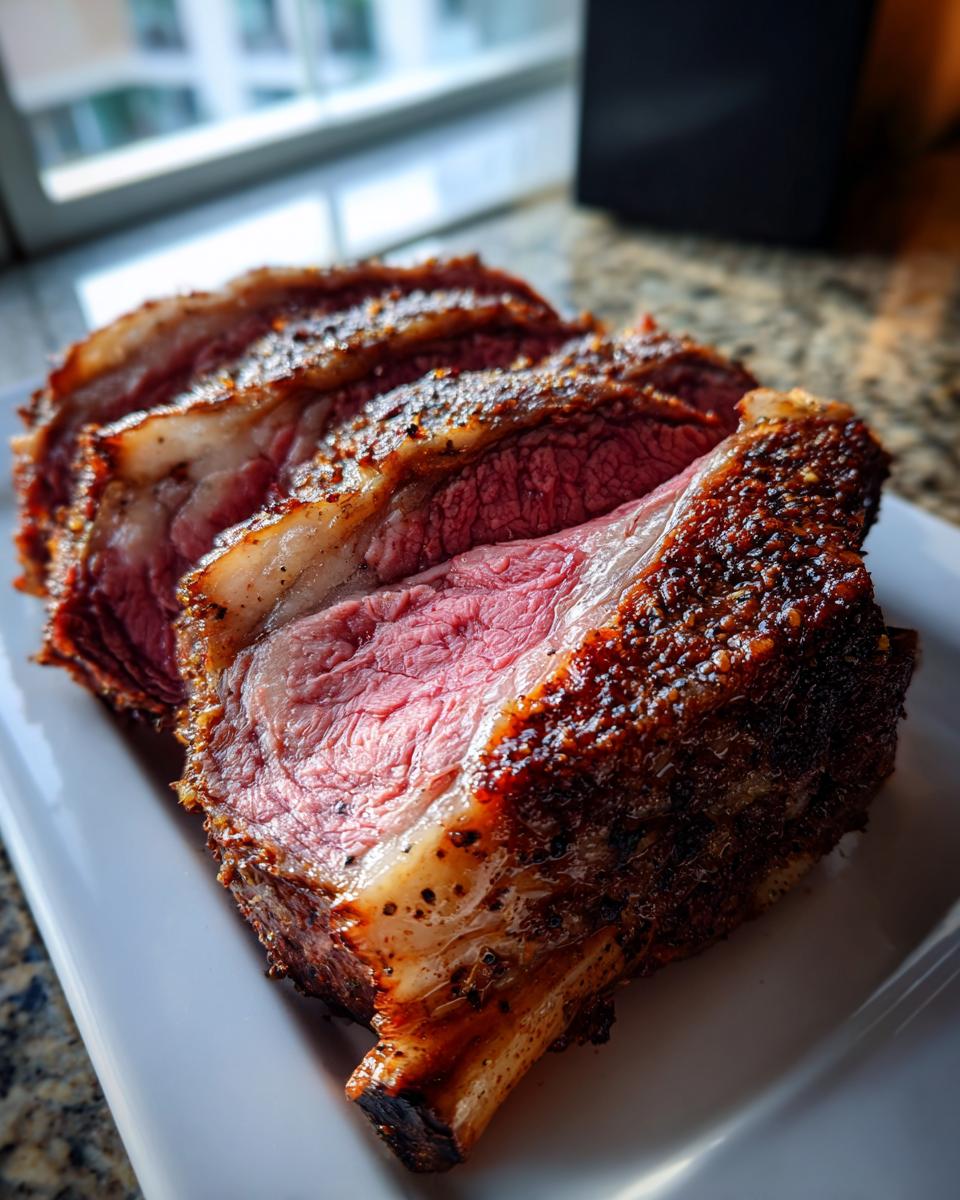
After its little spa day, it’s time to carve! Slice against the grain for the most tender bite. Now serve it up and bask in the glory. You did it!
Tips for Prime Rib Success
Now, I’ve made my fair share of prime ribs, and along the (sometimes bumpy) road, I’ve picked up a few tricks that make all the difference. For the ultimate, foolproof roast every time, here are my top tips. For more general cooking wisdom, don’t forget to peek at my ultimate guide to ingredients, temps, and tips. These little nuggets of advice have been key to making my Prime Rib Time & Temp Chart — Medium-Rare Every Time actually work like a charm!
First off, picking the right roast is half the battle. Look for one with good marbling – those little white flecks of fat throughout the meat. That’s flavor and juiciness talking! Also, try to get a roast that’s relatively even in thickness. This helps it cook more uniformly, making it easier to hit that perfect medium-rare edge-to-edge. I’ve found that bone-in really does offer a better flavor and helps insulate the meat, so I always go for that if I can.
Another thing that’s non-negotiable for me? A good meat thermometer. Seriously, I can’t stress this enough. Ovens can be so finicky, and every roast is a little different. Relying on just the clock is asking for trouble. Invest in a reliable instant-read digital thermometer. It takes the guesswork out of timing and ensures you pull that roast out at *exactly* the right moment for that gorgeous medium-rare. It’s way better than poking it repeatedly and hoping for the best!
Also, don’t be afraid of your oven’s quirks! If you know your oven runs a bit hot or cool, make slight adjustments. For example, if it runs hot, you might pull the roast a degree or two early. If it runs cool, it might need a few extra minutes. You’ll get to know its personality over time, just like you get to know a friend. The resting time is also your best friend – don’t skimp on it! That 30 minutes is crucial for juicy slices, every single time.
Frequently Asked Questions About Prime Rib
You’ve got questions, I’ve got answers! Cooking a prime rib can feel a bit intimidating, but honestly, once you get the hang of it, it’s a total breeze. Here are a few things folks often ask me, and my best advice for making your next roast absolutely perfect.
Can I cook a smaller or larger prime rib roast?
You bet! This Prime Rib Time & Temp Chart — Medium-Rare Every Time works for roasts of different sizes. Just remember that the time per pound is an estimate. Smaller roasts might cook a little faster, and larger ones will take longer. Always, always rely on your meat thermometer to tell you when it’s done. That’s your golden ticket to medium-rare perfection, no matter the size!
What if my oven runs hot or cold?
This is super common! Ovens can be real divas sometimes. If you know yours runs hot, you might want to pull the roast out a degree or two *before* it hits that 130-135°F mark, knowing it’ll continue cooking as it rests. If it runs cool, give it a few extra minutes. It takes a bit of getting to know your oven, but a reliable thermometer is your best friend here. It’s better to check early and often!
How do I know if my meat thermometer is accurate?
Don’t worry, you don’t need to be a scientist to figure this out! The easiest way is to test it in boiling water. Stick the probe into a pot of vigorously boiling water for about 10 seconds. It should read 212°F (100°C). If it’s a little off, most digital thermometers have a calibration feature, or you can just adjust your target temperature slightly based on the difference. A good thermometer is an investment that pays off big time!
Nutritional Information Disclaimer
Just a heads-up, any nutritional info you see for this amazing prime rib is an estimate, okay? It can change depending on the exact cut of meat, the brands of ingredients you use, and how big a slice you serve yourself (no judgment here!). For the most accurate details, you’d need to calculate it based on your specific choices. Want to know more? You can check out my general disclaimer page for the full scoop.
Share Your Perfect Prime Rib Experience!
I’ve shared my secrets, but now I want to hear from YOU! Did you try out this Prime Rib Time & Temp Chart — Medium-Rare Every Time? Did it turn out just as juicy and perfect as you hoped? Drop a comment below and tell me all about it! Did you try any fun variations? Heck, even a picture would make my day! And if you loved it, please rate the recipe. Seeing your successes means the world to me!
Prime Rib Time & Temp Chart
Ingredients
Equipment
Method
- Preheat your oven to 450°F (230°C).
- Pat the prime rib dry with paper towels. This helps create a better crust.
- In a small bowl, mix together the kosher salt, black pepper, garlic powder, and dried rosemary.
- Rub the spice mixture all over the prime rib roast.
- Place the prime rib, fat-side up, in a roasting pan.
- Roast at 450°F (230°C) for 15 minutes.
- Reduce the oven temperature to 325°F (160°C). Continue roasting for approximately 13-15 minutes per pound for medium-rare.
- Use a meat thermometer inserted into the thickest part of the roast, avoiding bone. For medium-rare, aim for an internal temperature of 130-135°F (54-57°C).
- Once the desired temperature is reached, remove the prime rib from the oven.
- Tent the roast loosely with foil and let it rest for at least 30 minutes before carving. This allows the juices to redistribute.
- Carve the prime rib against the grain and serve immediately.